Key Business Processes | Financial Resources Management   20-slide PPT PowerPoint presentation slide deck (PPTX)
$29.00

Key Business Processes | Financial Resources Management (20-slide PPT PowerPoint presentation slide deck (PPTX)) Preview Image
Flevy is the marketplace for business best practices.
Key Business Processes | Financial Resources Management (20-slide PPT PowerPoint presentation slide deck (PPTX)) Preview Image
Arrow   Click main image to view in full screen.

Key Business Processes | Financial Resources Management (PowerPoint PPTX Slide Deck)

PowerPoint (PPTX) 20 Slides

#2 in Process Maps $29.00
MBB/Big 4 style presentation that provides a taxonomy of key business processes related to managing financial resources
Add to Cart


Immediate download
Free lifetime updates

BENEFITS OF THIS POWERPOINT DOCUMENT

  1. offers a visual taxonomy of Key Business Processes related to managing financial resources
  2. provides a reference and a communication tool for process documentation, benchmarking and/or analysis projects

PROCESS MAPS PPT DESCRIPTION

Editor Summary Key Business Processes | Financial Resources Management is a 20-slide PowerPoint by ILMAM - Strategy & Management Consulting that maps financial resource processes using the APQC Process Classification Framework (PCF v7.3.1). Read more

This document provides a thorough visual taxonomy of key business processes related to managing financial resources based on APQC's cross-industry process classification system (PCF), the most used process framework globally.

A process classification framework can be utilized in many practical ways. For example, it can provide a:

1. framework and checklist of processes when scoping process-related projects
2. starting point for a process documentation, offering a detailed list of processes to use in process flows, maps, and/or models
3. basis for structuring a process repository, whether using a sophisticated software or simple folders
4. foundation for undertaking process-related benchmarking and generating business analytics

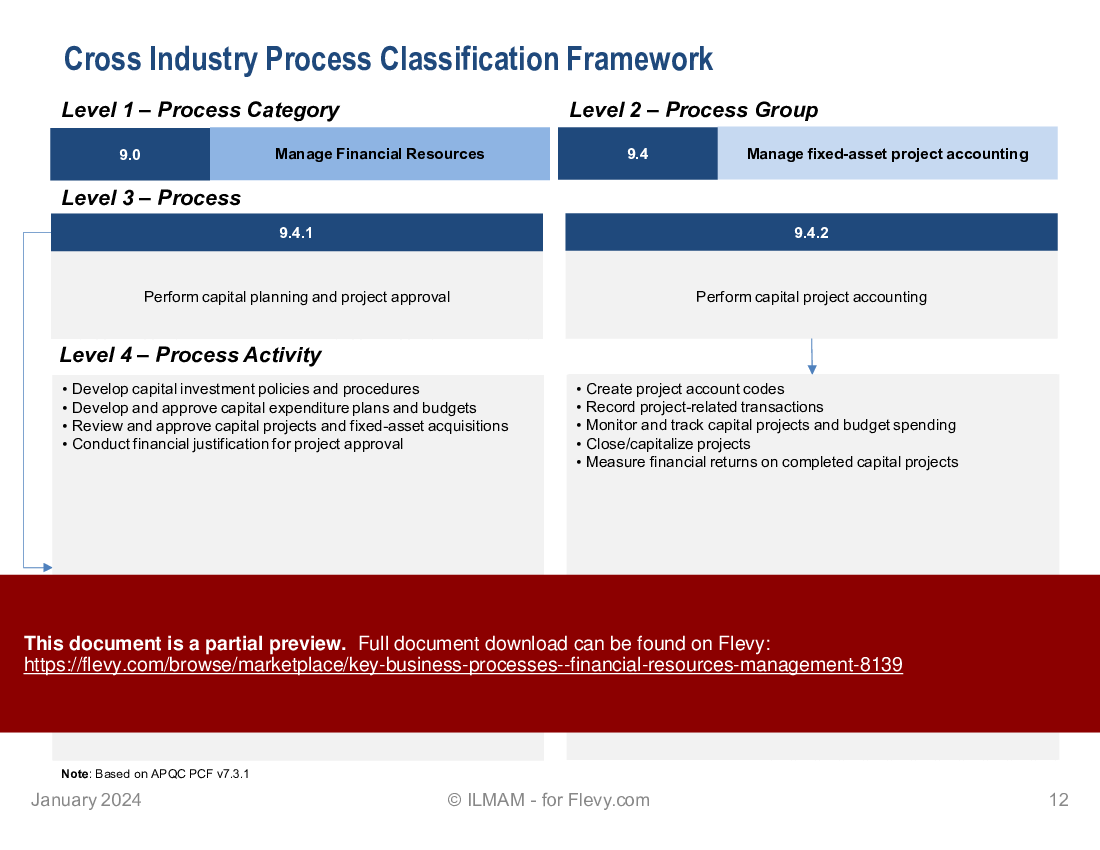
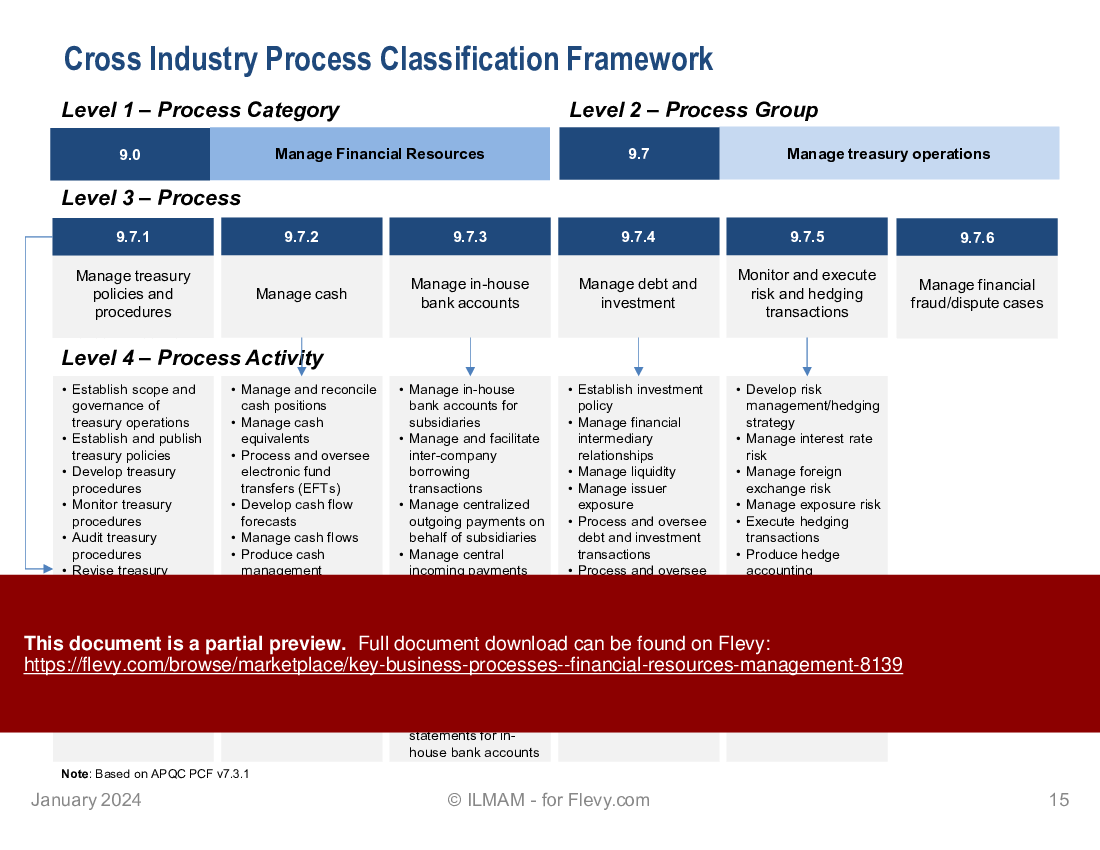
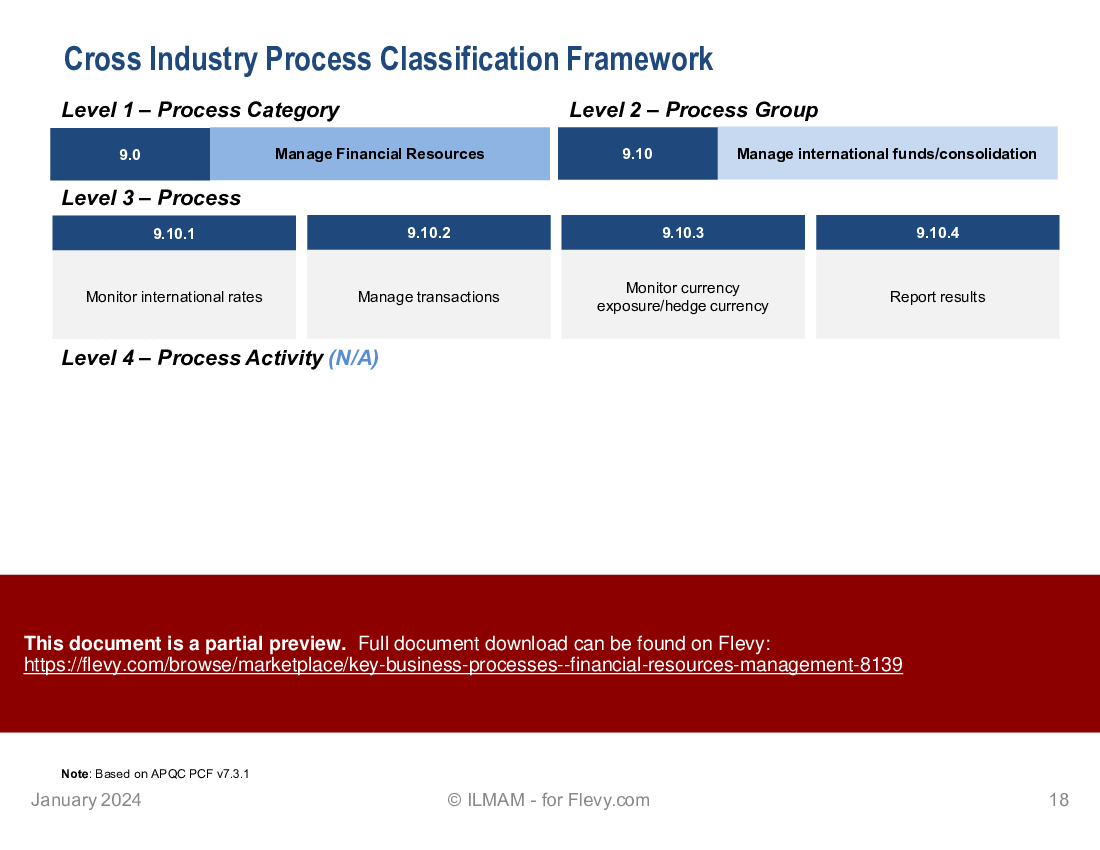
This document follows the structure, and facilitates the usage, of APQC's PCF v7.3.1. It includes 11 process groups, 46 processes, and 194 process activities related to managing financial resources.

Contents
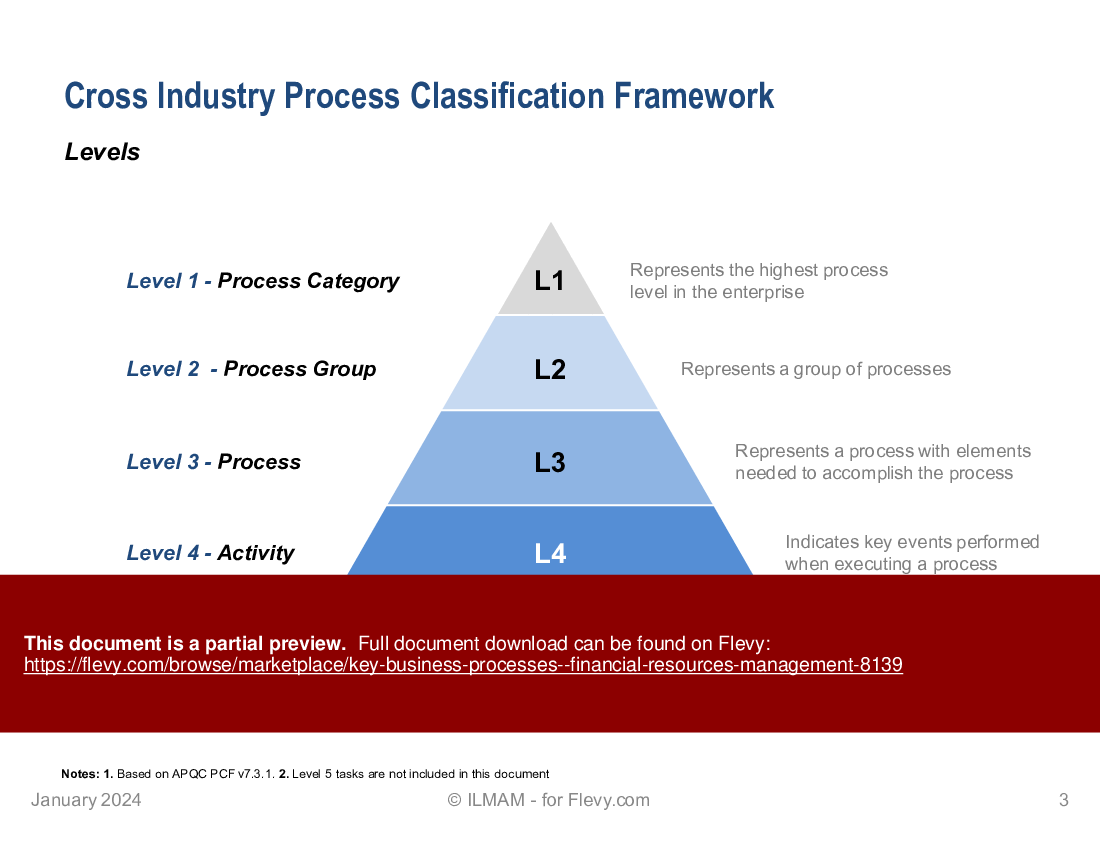
1. PCF Levels
2. PCF Overall Structure
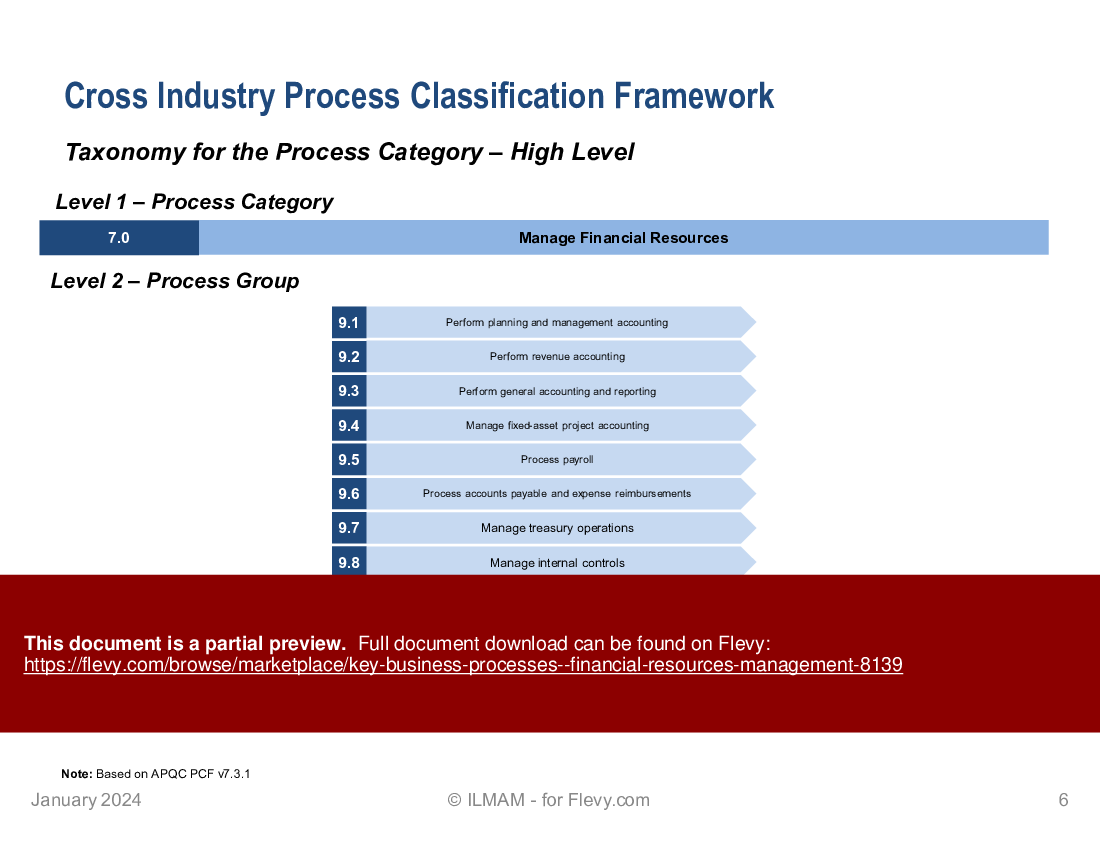
3. Taxonomy for the Process Category – High Level
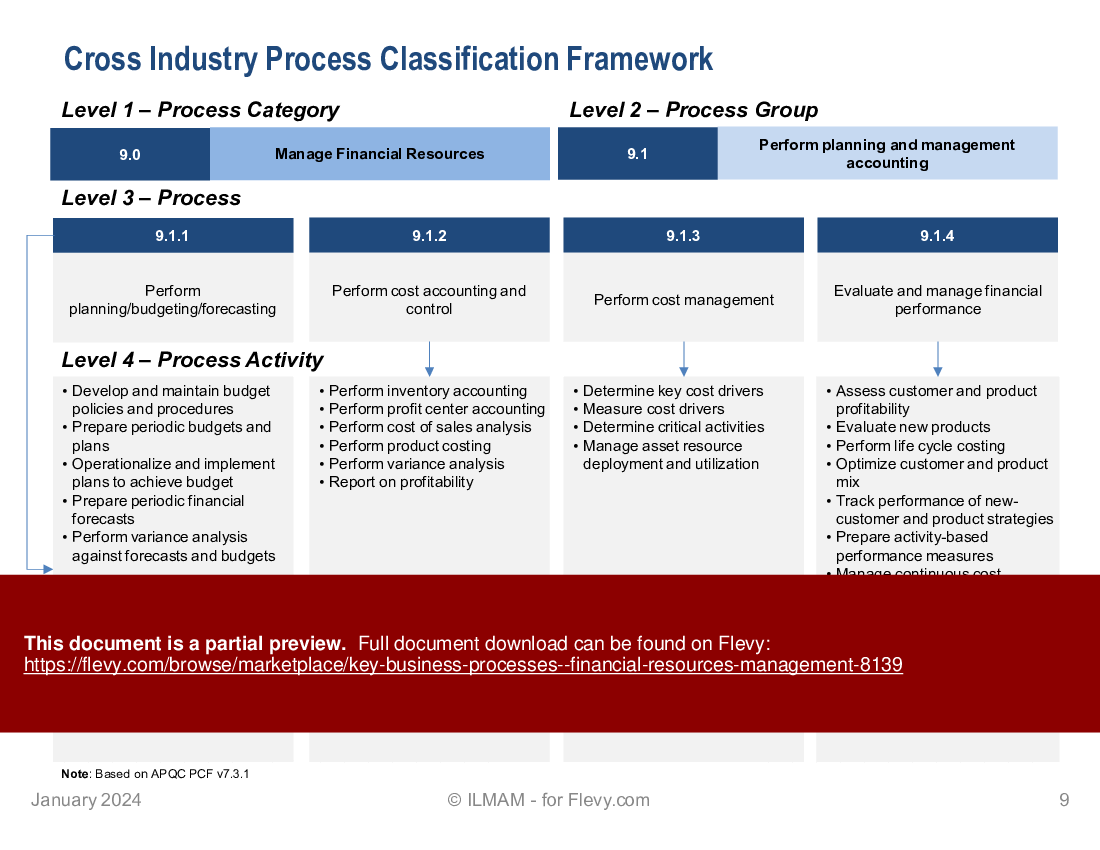
4. Taxonomy for the Process Category – Detailed
5. Taxonomy by Process Group – Detailed

Got a question about the product? Email us at support@flevy.com or ask the author directly by using the "Ask the Author a Question" form. If you cannot view the preview above this document description, go here to view the large preview instead.

MARCUS OVERVIEW

This synopsis was written by Marcus [?] based on the analysis of the full 20-slide presentation.


Executive Summary
The "Key Business Processes | Financial Resources Management" presentation offers a structured approach to understanding and managing financial resources within organizations. Utilizing the APQC Process Classification Framework (PCF), this document provides a detailed taxonomy of essential business processes related to financial management. Designed for corporate executives and consultants, this presentation equips users with the tools to enhance process documentation, benchmarking, and analytics, ultimately driving organizational improvement.

Who This Is For and When to Use
•  Financial executives responsible for resource management and reporting
•  Business process managers seeking to enhance financial operations
•  Consultants advising on financial process optimization
•  Project managers overseeing financial resource initiatives

Best-fit moments to use this deck:
•  During financial strategy planning sessions
•  When scoping process improvement projects
•  For training sessions on financial resource management best practices

Learning Objectives
•  Define key financial processes and their roles within an organization
•  Build a comprehensive financial resource management framework
•  Establish benchmarks for financial performance and process efficiency
•  Identify opportunities for process documentation and improvement
•  Develop a structured approach to financial resource analytics
•  Implement best practices for managing financial controls and compliance

Table of Contents
•  PCF Levels (page 3)
•  PCF Overall Structure (page 4)
•  Taxonomy for the Process Category – High Level (page 5)
•  Taxonomy for the Process Category - Detailed (page 6)
•  Taxonomy by Process Group - Detailed (page 7)

Primary Topics Covered
•  PCF Levels - The framework categorizes processes into levels, providing clarity on their structure and relationships.
•  PCF Overall Structure - An overview of the process categories, including operating and management processes relevant to financial resources.
•  Taxonomy for Financial Resources - A detailed breakdown of processes involved in managing financial resources, including planning, accounting, and reporting.
•  Process Activities - Specific activities associated with each financial process, detailing operational tasks and responsibilities.
•  Internal Controls - Guidelines for establishing and monitoring compliance with financial controls and policies.
•  Tax Management - Strategies for developing tax plans and managing compliance across various jurisdictions.

Deliverables, Templates, and Tools
•  Process classification framework template for financial resource management
•  Checklist for scoping financial process projects
•  Guidelines for documenting financial processes and controls
•  Benchmarking tools for financial performance analysis
•  Analytics framework for assessing financial resource efficiency

Slide Highlights
•  Overview of the APQC Process Classification Framework and its relevance to financial management
•  Detailed taxonomy of financial processes, highlighting key activities and responsibilities
•  Visual representation of the overall structure of financial resource management processes
•  Examples of internal controls and compliance measures for financial operations
•  Insights into effective tax management strategies and practices

Potential Workshop Agenda
Introduction to Financial Resource Management (30 minutes)
•  Overview of key financial processes and their importance
•  Discussion on the APQC Process Classification Framework

Process Classification and Documentation (60 minutes)
•  Hands-on session to classify existing financial processes
•  Development of a process documentation template

Benchmarking and Analytics (45 minutes)
•  Introduction to benchmarking tools for financial performance
•  Group activity on identifying key metrics for analysis

Customization Guidance
•  Tailor the framework to align with specific organizational financial processes
•  Update process documentation templates with company-specific terminology
•  Incorporate unique financial controls and compliance requirements relevant to the organization

Secondary Topics Covered
•  Financial performance evaluation techniques
•  Strategies for managing financial fraud and disputes
•  Best practices for treasury operations and cash management
•  Guidelines for managing accounts payable and receivable processes
•  Overview of global trade services and their impact on financial management

Topic FAQ

What is the APQC Process Classification Framework and how is it applied to financial process mapping?

The APQC Process Classification Framework is an open standard for categorizing business processes across industries. In financial mapping it provides a consistent taxonomy and levels for documenting activities, relationships, and ownership; the referenced deck follows APQC PCF v7.3.1 and maps processes into 11 process groups.

What core process areas should a financial resources taxonomy cover?

A financial resources taxonomy typically covers planning and management accounting, revenue and general accounting, payroll, tax management, treasury and cash management, accounts payable/receivable, fixed-asset accounting, and controls. The referenced material organizes these into 11 process groups, 46 processes, and 194 process activities.

How can internal controls be integrated into financial process documentation?

Integrate internal controls by documenting policy owners, control activities, monitoring steps, and compliance checkpoints alongside each process activity. Use control templates and guidelines to capture frequency, evidence, and escalation paths; the presentation includes guidelines for documenting internal controls as part of process documentation.

What should buyers evaluate when choosing a financial process taxonomy or toolkit?

Evaluate alignment to a recognized standard (APQC), the granularity of processes and activities, available templates for documentation, benchmarking and analytics capabilities, and customization guidance for industry specifics. Prefer toolkits that explicitly map processes at scale — for example those listing 11 process groups, 46 processes, and 194 activities.

What factors determine the implementation effort and cost for adopting a process taxonomy?

Key factors are project scope (number of process groups), desired level of activity detail, need for benchmarking and analytics, choice of repository software versus folders, and training requirements. Use scoping checklists and templates to estimate effort; the deck provides a checklist for scoping financial process projects.

I need to scope an accounts payable improvement project — what framework elements should I use?

Use a process-classification framework to identify AP activities, map current-state flows, document controls, and define benchmarking metrics before designing improvements. Apply standardized taxonomy and templates to ensure comparability; Flevy’s Key Business Processes | Financial Resources Management includes a process classification framework template and scoping checklist.

How should I structure a process repository for financial processes?

Structure the repository by PCF levels: organize content by process group, then by process, then by activity. Store documentation, controls, and metrics alongside each activity to enable analytics and benchmarking; the deck is intended as a foundation for a repository and maps 11 process groups into 46 processes and 194 activities.

Which benchmarking and analytics approaches work best for financial process performance?

Benchmarking should compare process-level performance (cycle times, cost per transaction, accuracy, compliance) against peers and historical baselines, supported by an analytics framework to identify improvement opportunities. The presentation provides benchmarking tools and an analytics framework designed for assessing financial resource efficiency.

Document FAQ
These are questions addressed within this presentation.

What is the APQC Process Classification Framework?
The APQC Process Classification Framework is an open standard that provides a structured approach to process management and benchmarking across various industries.

How can this presentation help in financial resource management?
This presentation offers a detailed taxonomy of financial processes, enabling organizations to document, benchmark, and improve their financial operations effectively.

What are the key components of financial resource management?
Key components include planning and management accounting, revenue accounting, general accounting, payroll processing, and tax management.

How can I implement the processes outlined in this presentation?
Utilize the provided templates and guidelines to classify and document your financial processes, then establish benchmarks for performance evaluation.

What tools are available for benchmarking financial performance?
The presentation includes benchmarking tools and analytics frameworks designed to assess and improve financial resource efficiency.

Can this framework be adapted for different industries?
Yes, the APQC Process Classification Framework is designed to be flexible and applicable across various industries, allowing for customization based on specific needs.

What are the benefits of establishing internal controls?
Establishing internal controls helps ensure compliance, mitigate risks, and enhance the reliability of financial reporting.

How does tax management fit into financial resource management?
Tax management is a critical component, involving the development of tax strategies and ensuring compliance with local and international tax regulations.

Glossary
•  APQC - American Productivity & Quality Center, an organization that develops benchmarking and best practices.
•  PCF - Process Classification Framework, a structured approach to categorizing business processes.
•  Financial Resources Management - The process of planning, managing, and controlling financial resources within an organization.
•  Internal Controls - Policies and procedures designed to ensure the integrity of financial reporting and compliance.
•  Benchmarking - The practice of comparing business processes and performance metrics to industry bests.
•  Treasury Operations - The management of an organization's cash flow, investments, and financial risks.
•  Accounts Payable (AP) - The process of managing and processing payments owed by a company to its creditors.
•  Accounts Receivable (AR) - The process of managing and collecting payments owed to a company by its customers.
•  Tax Strategy - A plan for managing tax liabilities and ensuring compliance with tax laws.
•  Global Trade Services - Services related to the management of international trade transactions and compliance.
•  Compliance - Adherence to laws, regulations, and internal policies governing financial practices.
•  Financial Reporting - The process of producing statements that disclose an organization's financial status to stakeholders.
•  Cost Management - The process of planning and controlling the budget of a business or project.
•  Revenue Accounting - The process of recording and reporting revenue generated by a business.
•  Payroll Processing - The administration of employee compensation, including wages, bonuses, and deductions.
•  Fixed-Asset Accounting - The process of managing and reporting on a company's fixed assets.
•  Financial Performance - A measure of how well a company uses its assets to generate revenue.
•  Risk Management - The identification, assessment, and prioritization of risks followed by coordinated efforts to minimize or control the probability of unfortunate events.
•  Fraud Management - The processes and practices used to prevent, detect, and respond to fraudulent activities.
•  Cash Management - The process of collecting, managing, and investing cash to ensure liquidity and financial stability.
•  Investment Management - The professional management of various securities and assets to meet specified investment goals.
•  Compliance Reporting - The process of reporting to regulatory bodies to demonstrate adherence to laws and regulations.

Source: Best Practices in Process Maps, Management Accounting PowerPoint Slides: Key Business Processes | Financial Resources Management PowerPoint (PPTX) Presentation Slide Deck, ILMAM - Strategy & Management Consulting


$29.00
MBB/Big 4 style presentation that provides a taxonomy of key business processes related to managing financial resources
Add to Cart
  

ABOUT THE AUTHOR

Additional documents from author: 29

ILMAM is a strategy and management consulting provider that specializes in:

•  Strategic management, including strategic planning and performance management

•  Strategy enablers, such as key business processes and governance

Select top quality guides and tools are offered through to enable you to perform work at your company or support your clients effectively and ... [read more]

Ask the Author a Question

You must be logged in to contact the author.

Click here to log in Click here register

Did you know?
The average daily rate of a McKinsey consultant is $6,625 (not including expenses). The average price of a Flevy document is $65.
Bundle and save! You can save up to % with bundles!

View bundle(s)


Trusted by over 10,000+ Client Organizations
Since 2012, we have provided business templates to over 10,000 businesses and organizations of all sizes, from startups and small businesses to the Fortune 100, in over 130 countries.
AT&T GE Cisco Intel IBM Coke Dell Toyota HP Nike Samsung Microsoft Astrazeneca JP Morgan KPMG Walgreens Walmart 3M Kaiser Oracle SAP Google E&Y Volvo Bosch Merck Fedex Shell Amgen Eli Lilly Roche AIG Abbott Amazon PwC T-Mobile Broadcom Bayer Pearson Titleist ConEd Pfizer NTT Data Schwab


Read Customer Testimonials

 
"Flevy is our 'go to' resource for management material, at an affordable cost. The Flevy library is comprehensive and the content deep, and typically provides a great foundation for us to further develop and tailor our own service offer."

– Chris McCann, Founder at Resilient.World
 
"I am extremely grateful for the proactiveness and eagerness to help and I would gladly recommend the Flevy team if you are looking for data and toolkits to help you work through business solutions."

– Trevor Booth, Partner, Fast Forward Consulting
 
"Flevy.com has proven to be an invaluable resource library to our Independent Management Consultancy, supporting and enabling us to better serve our enterprise clients.

The value derived from our [FlevyPro] subscription in terms of the business it has helped to gain far exceeds the investment made, making a subscription a no-brainer for any growing consultancy – or in-house strategy team."

– Dean Carlton, Chief Transformation Officer, Global Village Transformations Pty Ltd.
 
"[Flevy] produces some great work that has been/continues to be of immense help not only to myself, but as I seek to provide professional services to my clients, it gives me a large "tool box" of resources that are critical to provide them with the quality of service and outcomes they are expecting."

– Royston Knowles, Executive with 50+ Years of Board Level Experience
 
"As a consultant requiring up to date and professional material that will be of value and use to my clients, I find Flevy a very reliable resource.

The variety and quality of material available through Flevy offers a very useful and commanding source for information. Using Flevy saves me time, enhances my expertise and ends up being a good decision."

– Dennis Gershowitz, Principal at DG Associates
 
"As a niche strategic consulting firm, Flevy and FlevyPro frameworks and documents are an on-going reference to help us structure our findings and recommendations to our clients as well as improve their clarity, strength, and visual power. For us, it is an invaluable resource to increase our impact and value."

– David Coloma, Consulting Area Manager at Cynertia Consulting
 
"I have used Flevy services for a number of years and have never, ever been disappointed. As a matter of fact, David and his team continue, time after time, to impress me with their willingness to assist and in the real sense of the word. I have concluded in fact "

– Roberto Pelliccia, Senior Executive in International Hospitality
 
"The wide selection of frameworks is very useful to me as an independent consultant. In fact, it rivals what I had at my disposal at Big 4 Consulting firms in terms of efficacy and organization."

– Julia T., Consulting Firm Owner (Former Manager at Deloitte and Capgemini)


Save with Bundles

This document is available as part of the following discounted bundle(s):


Customers Also Bought These Documents


Customers Also Like These Documents

Explore Templates on Related Management Topics


Your Recently Viewed Documents
Receive our FREE presentation on Operational Excellence

This 50-slide presentation provides a high-level introduction to the 4 Building Blocks of Operational Excellence. Achieving OpEx requires the implementation of a Business Execution System that integrates these 4 building blocks.









